
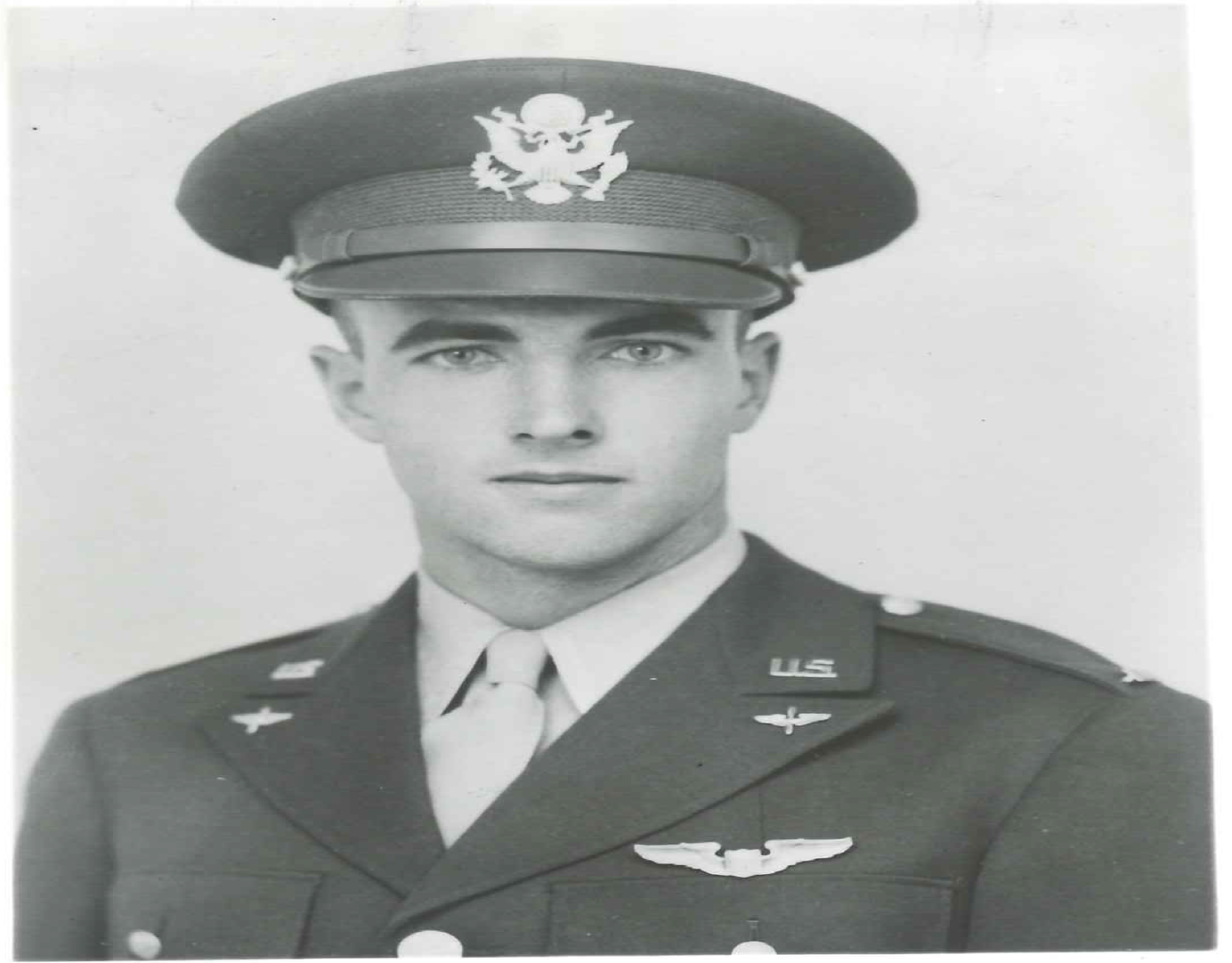
Alfred Brown Clumpner
Pre-WSC Background
Many of our Fallen Cougars lived relatively sedentary lives. Being born in and living their entire childhoods in or around in a particular town. Alfred B. Clumpner is quite the opposite. As such, his story begins with his father to explain how the family came to Washington State and with a career that required moving every five to ten years in order to climb the bureaucratic ladder. Born in Wisconsin in 1888, Guy Alfred Clumpner (G.A.) moved to Washington with his family in 1907. After finishing his education in Washington, he returned to the Midwest, receiving his B.A. from the University of Michigan, where he was on the debate team in 1912. He then returned to the state of Washington, where he attained his master’s degree in education from Washington State College in Pullman, Washington. As if this were not impressive enough for a man of his time, G.A. continued his education, taking doctoral classes at Stanford University in Palo Alto, California, and the University of Washington in Seattle. By the end of his academic endeavors and traveling, he was hired as a principal of Kootenai High School in Kootenai, Idaho. He fell in love with and married a young woman named Hellen who gave birth to the happy couple’s first son, Alfred, on July 16, 1915. By 1920, there were two more boys in the Clumpner household; Eugene was two years old, and little Edwin was almost one. Alfred Clumpner would follow his parents throughout their journey together in Washington State before striking out to make his own mark on the world.
By all appearances, the Clumpner family did quite well for themselves in Kootenai, but G.A. was a man of ambition and when the opportunity to run his own school presented itself, he took it. By 1930 the Clumpners had moved to a house on Natches Avenue in little Moxee, Washington. Though it has grown substantially in recent years, at the time, Moxee, located in the Yakima Valley, was a tiny farming community, and G.A. had taken the job as the “school master” and “superintendent” of Moxee School District. Not only had the Clumpners moved up in the world of education, but the increased income allowed Hellen to stay home and raise their ever-growing family. By 1930, to accompany Alfred, Eugene, and Edwin, Hellen brought William and Benjamin Clumpner into the world, bringing the total number of boys in the Clumpner brood to five. It was in Moxee where Alfred grew up and graduated from High School. Like his father, Alfred understood the value of a university education and decided to enroll in Washington State College.
WSC Experience
There are surprisingly few documents from Alfred’s time at Washington State College in Pullman. However, records show that he reached several milestones in his four years on campus. While pursuing his bachelor’s degrees in mining engineering and geology he was a foreman at the Holden mine in Chelan County in the summers. He also met and fell in love with the young Evelyn Moore. One year older than Alfred, Evelyn completed her degree in education at the University of Idaho before taking a job as a primary school teacher in Plummer, Idaho. The couple was married in December of 1941 at First Christian Church in Moscow, Idaho. In a saner time the two would likely have settled down somewhere and pursued their respective careers and raised a family. Instead, World War II was raging during Alfred’s last year at Washington State college. He completed his degrees in 1943 and enlisted in the United States army Air Corp on June 18, 1942, in Seattle. He listed his mother as his next of kin and the town of Holden as his home then.
Wartime Service and Death
World War II in Europe had been raging since Nazi Germany invaded Poland on September 1, 1939. The fascist government, under the leadership of Austrian-born dictator Adolf Hitler, waged war throughout Europe. They conquered both Denmark and Norway in April of 1940, followed by Belgium, the Netherlands, and tiny Luxembourg in May of that same year. Most astonishingly the Germans managed to conquer France in just 39 days and snapping up North Africa from the French and British in the process. They followed up those light-speed victories with a massive aerial campaign against the United Kingdom. In 1941 the Germans turned their military aims to the east, conquering Yugoslavia and Greece in April before betraying and invading the colossal Soviet Union on June 22, 1941. They then made a mistake one of the most famous mistakes in military history. Largely to appease their Japanese allies and to satisfy Hitler’s ideological fanaticism, but also with an eye to destabilizing American politics, Germany then declared war on the United States on December 11, 1941.
The United States Army desperately needed manpower, especially those with education and the pedigree with machinery to fly airplanes. Establishing airpower was one of if not the key factors in gaining the upper hand on the German Wehrmacht. Lucky for the Army, it just so happened that a well-educated young man with a strong academic record working with mining equipment for years had just registered for the United States Army Air Corp. Alfred was thus selected to enter the intensive pilot training program. Alfred was inducted into the military on December 7, 1942, the one-year anniversary of the Pearl Harbor attack. He proceeded to Santa Ana Army base for a three-month pre-flight training program, graduating on March 5, 1943. From there, he attended primary training at Thunderbird Field in Phoenix, Arizona, graduating on May 15, 1943. He had little time to catch his breath from there, proceeding to basic training at Marana Air Base in Tucson, Arizona, graduating once again in July 27 of 1943. Newspapers followed Alfred’s progress with some interest, especially in Tacoma where his father was now superintendent and teacher at Orting School District outside Puyallup. The area was much smaller and more intimate in that era. The News Tribune in Tacoma ran a story entitled “Wings” with a big picture of Alfred above the headline, telling the story of “the son of Mr. and Mrs. G.A. Clumpner of Orting” received his wings after completing his training in Marfa, Texas and “was commissioned upon completion of his course in training in twin engine planes.” He was commissioned as a Second Lieutenant to go along with those shiny wings pinned to his deservedly puffed-out chest that day. Alfred got a one-week stint of leave between October 1 – 8 in, 1943, before proceeding to his transitional training and officially entering the pilot pool in Roswell, New Mexico. He then transferred to Salt Lake City through mid-January of 1944 before receiving assignment-specific training to be an officer. His time as a foreman surrounded by miners must have made him a good student in his training to lead the ten-man crews of an American B-17 Heavy Bomber. He completed the officer training and tactical training in Alexandria, Louisiana, and Kearney Nebraska by mid-April of 1944. It was in these last phases of training that Alfred got to know his future crewmates, one of which was later addition to the team.
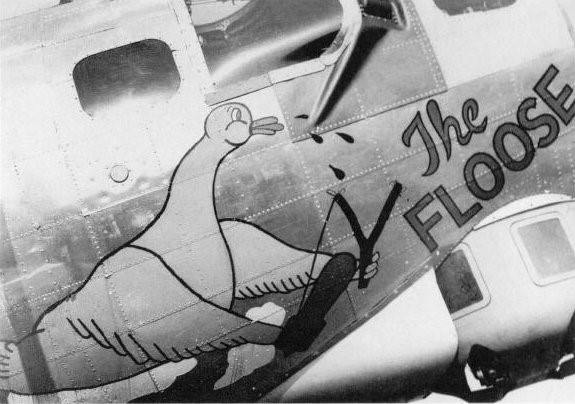
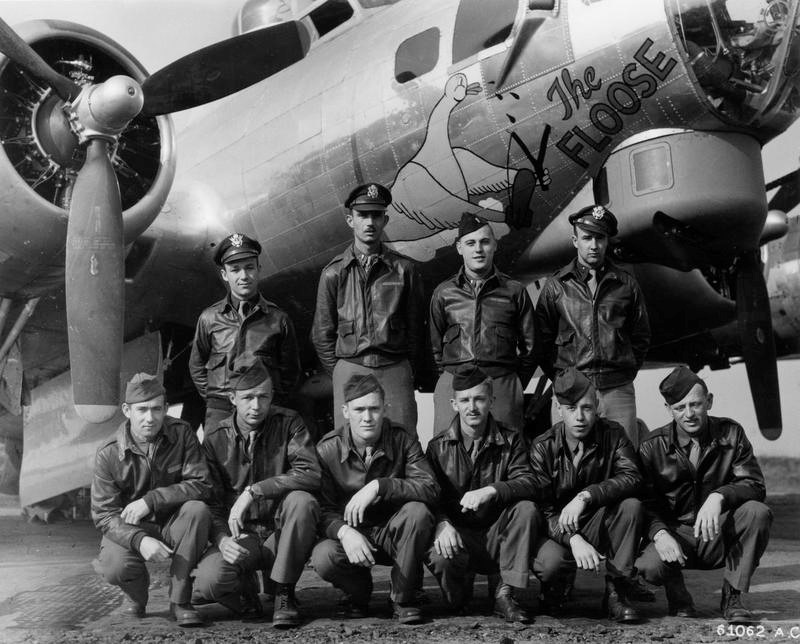
Lowell Rickey was completing his training as a bombardier on a B-17 at the same time Alfred was going through his training as a pilot. It was in these periods that bomber crews formed, shifting out different members or disbanding crews entirely as personalities meshed, or skillsets clashed. After the war, Lowell wrote Alfred’s parents a letter describing how he met Alfred and joined his crew. “After my fourth crew split up,” Rickey wrote, “I went to the line and looked over the pilots and crews without bombardiers. Of all the crews I met, and all I’ve been on, Al’s was the best ever. Under his kind leadership we all pulled together and worked better than we had ever worked before.” It seems Al’s kind-hearted nature and experience in leading men made him an ideal officer in the air corp. “We flew to England on our own plane.” Recalled Rickey. The plane was a B-17G Flying Fortress called “The Floose” with nose-art depicting a bird comically spitting.
The boys arrived in the British Isles and were assigned to the famed 303rd Bomb Group, “The Hell’s Angels,” of the 358th Bomber Squadron in the Eighth Air Force and based at Molesworth Airfield in Cambridgeshire, England. The boys “practiced for days and days and talked and dreamed and planned till all hours of the night,” recalled Lowell Rickey. “Finally, on May 24, 1944 “The big day came! Of all targets for a first mission, it was the one we wanted.” Their first mission was a bombing run over the beating heart of the Nazi empire, Berlin. “They put Al and the boys with an experienced pilot-bombardier-navigator crew. I flew with another crew on his left wing and Ernie (co-pilot of Al’s crew) on the right wing.” Alfred got into his co-pilot’s seat in the B-17 #42-97787 next to the experienced pilot Joe Raiford Worthley. From Hanna Oklahoma, Worthley was a swashbuckling veteran of 26 missions and had flown a few rough missions in the past and was thus well-suited to teaching the still wet-behind-the-ears Clumpner the tricks of the bomb-dropping trade. Also on board was bombardier Austin J. Mack, who had flown 29 such missions, the waist gunner, Leslie E. Schweinebraten, was on his 31st mission, and Carroll “Ted” Binder Jr. from Highland Park, Illinois was the Navigator. John W. Goetz, Kenneth Pickell, James Simeon Baker, Elmer Earl Simpson, and Erwin C. Zimmer filled out the rest of the crew and manned the machine guns that gave the B-17 its distinctive name, The Flying Fortress.
The other separated crew members of 28-year-old pilot Alfred Clumpner took their positions in planes on either wing of Clumpner as they took off for Berlin. “The con-trails were so thick in soma places, we lost track of each other a number of times.” Wrote Lowell Rickey, “We saw no flak at all . . . but the coming battle had lost all its flavor. All I wanted to do was to get back to the base and find Al there laughing and joking with the crew.” At some point, and for reasons the airmen in surrounding planes could not readily identify, Clumpner’s plane fell out of formation and descended, last seen burning at 21,000 feet by Captain Lawrence C. Thompson. The plane went down in the North Sea some 20 kilometers west of St. Peter-Ording in Schleswig-Holstein, Germany.
Postwar Legacy
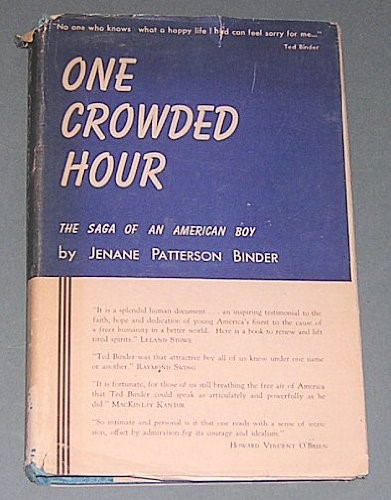
The mystery of what happened to the boys on board #42-97787 remained for some time after it was shot down. The families were initially notified by the Army that their sons had gone down over the North Sea on June 5, 1944. But it was some time until enough information trickled to the families. Janene Patterson Binder, the wife of the navigator Ted Binder, published a book about her late husband and his fateful flight entitled One Crowded Hour: The Saga of an American Boy in the Williams-Frederick Press in 1946. The book tells some of the story of what happened on that day and how the family dealt with the agony of knowing and the agony of not knowing. It was “only after the death notices had been sent to four of the crew families that we were permitted to know the names and addresses of our companions in anxiety.” Wrote Binder. They discovered that their fellow grieving and nervous families were comprised of “two families in Pennsylvania. Two in Tennessee, and one each in Arkansas, Michigan, Oregon, and Washington.” They also discovered that the lone survivor of plane #42-97787 was the tail gunner, Sergeant Elmer E. Simpson. “When the other four unaccounted-for boys did not make themselves known after VE day had opened the prison doors in Germany and permitted aviators hiding underground to communicate freely with their loved ones, the War Department presumed that they too had perished on May 24th.” Further explained Binder, “All crew members families hopefully awaited the return of Simpson, the sole known survivor.” Eventually, in July of 1945, Sergeant Simpson told his story “In a terse letter which obviously had been hard to write, even fourteen months after the ordeal.” Simpson explained that the plane had hit no trouble well into their trip to Berlin, but “about 40 minutes off target we were hit by the first three klak [sic] bursts that came up. There were direct hits and the No. 2 and No. 3 engines and the last one was in the cockpit. We were knocked straight up and put out of formation to the left over the North Sea.” Wrote Simpson. He then saw a piece of metal fly under the plane. He could not see the crew from his vantage point in the tail of the plane. He crawled up from his position and investigated the fuselage to see the plane was empty up to the radio room, he could not see into the cockpit. He realized then that the metal he saw must have been the door busting out of the side of the plane when the crew bailed out. “The plane was in a glide, gaining speed, vibrating badly, on fire with the left wing dropped dangerously low.” He then said he saw someone bail out from the nose of the plane, perhaps the flak burst that struck the cockpit had not killed the pilots after all. Simpson put on his parachute and jumped from the plane. He landed, of all places, in the middle of a German flak gun emplacement and was taken prisoner. The Germans told him the rest of the crew had died, but Simpson “I knew they hadn’t all crashed in the plane, and I figured that (expletive deleted) were just telling me that to get me to talk.”
The families grieved and those that lost friends had to find a way to deal with the trauma of losing Alfred and the other members of the Floose crew before they ever got to fly a combat mission together. “For days we walked around as in a sleep.” Wrote Lowell Rickey, relating the weeks following May 24th. “It couldn’t have been Al – after my third raid I was sent to another base. From then on I lead the 303rd.” The families had been tied in knots for months, clinging to any piece of information they received about their loved ones. Perhaps Carroll Binder Sr. The father of Ted Binder explained the path to healing and acceptance best when he wrote “That is all we know. Probably all we will ever know about the one U.S. bomber closes to our hears of the 9,937 in combat over Europe.”
Evelyn eventually moved to Chehalis, Washington, on the Southwest coast, likely teaching there as she had taught in Plummer, Idaho. E.O. Holland at Washington State College remained in contact with the families of WSC fallen, creating a series of pamphlets, and providing plaques and memorials to all the Fallen Cougars, just as the modern Fallen Cougars Project seeks to carry on that legacy. G.A. Clumpner retired from school administration work and went back to teaching in 1945, in 1958 he passed away and newspapers summed up his legacy as an educator and a family man: “for more than 30 years he taught in the schools of this state. He was superintendent of schools at Clarkston and later Rosalia. He also served as superintendent at Rainier and Orting on the west side of the state. Following his retirement in 1945, he taught at Elk and Moran Prairie schools.” Eugene Clumpner became a doctor living in Lakewood, Ohio. Edwin was in Los Angeles in 1958. William joined the United States Naval Reserve during the war, receiving preliminary flight instruction at the Pasco Washington Naval Air Station and then and went through the naval training center in March of 1945. William was in Dallas, Texas in 1958, and lastly, Benjamin Clumpner was in Tacoma.
It was later discovered that Alfred’s body was retrieved from the North Sea by the Germans, who buried him in the Tonning cemetery in Schleswig-Holstein, Germany on June 12, 1944, in grave number 11. His body was returned to the American authorities who awarded him the Purple Heart and laid him to rest at the Ardennes American Cemetery and Memorial, Neuville en Condroz,Neupre, in Liege Belgium, Memorial ID 5637591. Alfred is also memorialized back home in the United States. His name is emblazoned on the World War II memorial located at the main campus of his and his father’s Alma Mater, today called Washington State University, in Pullman, Washington.