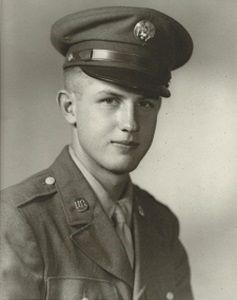
William Howard Adams
Pre-WSC Background
The modern city of Spokane is a sprawling and continuously growing metropole. While the state of Washington is a singular political unit, the cascade mountains that divide the state into eastern and western “halves” have seriously impacted the state's development over time. While the city of Olympia is the recognized political capital of Washington State, people living east of the cascades only pay it nominal attention. “East-siders” are much more likely to recognize Spokane as the economic and political hub of their region. Today Spokane is the de facto capital of eastern Washington’s “Inland Empire.” However, that has not always been the case, in the nineteenth century Spokane was just like all the other towns in the region, a tiny agrarian outpost, except it spelled its own name wrong.
Originally just a trading post intended to conduct business with the local Spokane Indian tribe, the post gradually grew as the Spokane River made it suitable for small scale settlement. As the nineteenth center wore on more people came to the area to take advantage of newly discovered mineral wealth, especially gold in the Idaho Panhandle and British Columbia. In 1873, James Nettle Glover officially founded the town of “Spokan Falls,” a phonetic spelling of the name that was used for a decade before the “e” was added to the end, and the “Falls” was chopped off. By 1880 the town had a population of 300, but that changed quickly. Anyone that has seen the Mel Brooks classic Blazing Saddles knows how important railroads were to local economies. In 1881 the Great Northern Railway reached Spokane and in 1883 linked to the transcontinental line. Spokane’s prime position at the center of the railroad established it as the Imperial City of the Inland Empire By 1909 the Hamlet with a mis-spelled name had 100,000 inhabitants. By the 1920’s the mining economy was in decline and gave way to timber and agricultural production. The small town of Hillyard is today a neighborhood in the ever-growing Spokane sprawl, and the nearby town of Davenport also sits along those same rail lines that made Spokane what it is today. These were the towns that William Howard Adams was raised in, the places that shaped him before he went off to Washington State College and then to war for his country.
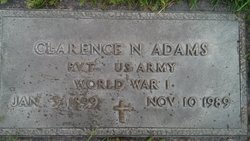
According to William’s enlistment records, he was born in Spokane, Washington, on March 13, 1924. But, by 1930, the family had moved to Moscow, Idaho. Clarence N. Adams and Mary A. Adams lived with their seven-year-old daughter Vivian and six-year-old son William Howard Adams at 325 Sawis Street. Mary’s mother was from “English” Canada, an important distinction during tumultuous years for Canada's French and English populations, and her father was from Maine. Clarence was born and raised in Illinois. Under normal circumstances, it is hard to imagine how Mary and Clarence met. But the 1930 census also reveals that Clarence was a veteran of World War I, an experience that would certainly have seen him pass through the east coast on his way to war. William’s middle name, Howard, is also his uncle’s name. Howard Adams was Clarence’s brother, born one year later in 1900, and died in May of 1918, presumable in World War I as well, though the record does not say how he passed. By all appearances, the family was doing quite well in the Idaho panhandle. Clarence was an electrician working as a lineman to help electrify the rural areas of the Pacific Northwest. But by 1940, the family had moved further west, settling in Davenport, some forty miles west of Spokane. The records are a little confusing at this period. The Adams’s appeared to be split up. One census shows Mary, Vivian, and Clarence living in one house, but William living in another. If the census is correct, William was living with an eighty-year-old man named Hans Jacobsen, originally from Denmark. Whatever the case, the family was living in Davenport and the children attended both Davenport High School for a time and John Rogers High School in Spokane. Clarence was moving up in his profession. A lineman in 1930, by 1940, Clarence was the manager of a branch of the Davenport electrical power office, or a “Water Power Company Agent,” as the Spokesman-Review newspaper out of Spokane phrased it. While the sources may be confusing on William’s exact living situation in the 1930’s, one thing is certainly clear, he was quite an athlete. That same Spokesman-Review article said William was “well known in Davenport, Wash.. . . He was an outstanding football, basketball, and tennis star.” Another article called him “A former John Rogers high school and Davenport high school athlete.” When William finished his academic and illustrious athletic career in high school, he decided to continue his education and enrolled at Washington State College in Pullman, Washington. Around this same time, Clarence took on the job of managing the Hillyard office for the Washington Water Power Company. The move to 5726 North Cook Street in Spokane had the advantage of bringing the family closer to their son as he went off to college.
WSC Experience
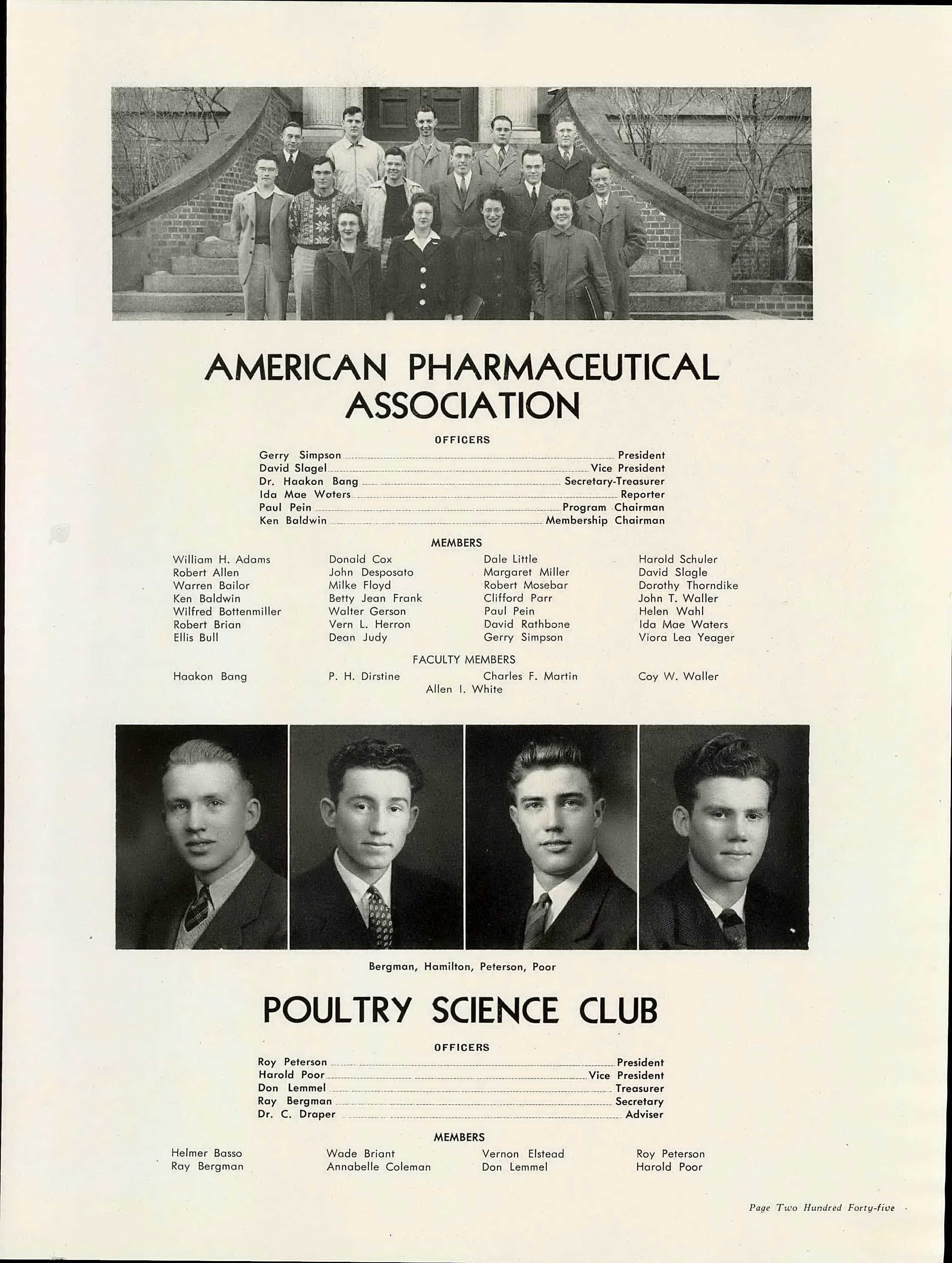
William arrived on the Washington State College campus in 1942 and, proving he was at least as academically inclined as he was athletically inclined, he majored in pharmacology. By 1943, he appeared to have settled in nicely at WSC, joining the American Pharmaceutical Association club on campus. Unfortunately, the boundless academic potential for this young athlete and aspiring pharmacist would be put on hold as global circumstances conspired to drag William, and millions of young men like him, into the maelstrom of World War II.
Wartime Service and Death
The war in Europe had been raging since Nazi Germany invaded Poland on September 1, 1939. The fascist government, under the leadership of Austrian-born dictator Adolf Hitler, waged war throughout Europe. They conquered Denmark and Norway in April of 1940, followed by Belgium, the Netherlands, and tiny Luxembourg in May. Most astonishingly, the Germans managed to conquer France in just 39 days and snapping up North Africa from the French and British. They followed up those light-speed victories with a massive aerial campaign against the United Kingdom. In 1941, the Germans turned their military aims to the east, conquering Yugoslavia and Greece in April before betraying and invading the colossal Soviet Union on June 22, 1941. They then made one of the most famous mistakes in military history. Largely to appease their Japanese allies and to satisfy Hitler’s ideological fanaticism, but also with an eye to destabilizing American politics, Germany declared war on the United States on December 11, 1941.
Suddenly The United States found itself in wars on two continents, each separated by thousands of miles ocean, one of which was filled with the famed Kriegsmarine U-Boats, the other with the Japanese Imperial Navy. The United States was thus in desperate need of manpower, especially intelligent and brave young men to fill the ranks of the United States Army. Luckily for them there were several hundred of those kinds of men at Washington State College, William Howard Adams among them. In 1943 William went home to Spokane and enlisted in the United States army. According to his draft card his family still lived at 5726 North Cook Street with the telephone number G5342. He listed his father as his emergency contact and his employer as the Great Northern Railroad in Hillyard, possibly working for his father in the summers between semesters at WSC. He stood at five foot ten inches tall, weighed in a bit scrawny for his height at 155 pounds, with brown hair and blue eyes. William was shipped off to basic training where he was assigned service number 1914407. Upon completion of his training, he was assigned the rank of Private and assigned to the 414th Infantry Regiment of the 104th Infantry Division, better known as “The Timberwolf Division,” that bore the quite menacing motto “Nothing in Hell Can Stop the Timberwolves.” The Timberwolves were sent to Europe on August 27, 1944 and were immediately attached to the Canadian First Army in Belgium on October 23, 1944.
Allied armies had successfully seized Northern France from the Nazis and began pushing the Wehrmacht back into the low countries. Leading the way across the Mark River and Maas rivers, the 104th Infantry division developed a reputation as one of the best divisions in the Army. By early November of 1944 the 104th relieved the First Infantry Division at Aachen as the Allies prepared their assaults across the Roer River into Germany. William and the men of the 104th especially distinguished themselves in their night fighting, which prompted Lieutenant General J. Lawton Collins, commanding VII Corps, to praise the “leadership, dash, and sound training of the division.” The night attacks badly wrongfooted the Germans who had not expected this kind of fighting. In just a few days the 104th had cleared all German forces from between the Inde and Roer rivers by taking the cities of Lammersdorf, Inden, and Lucherburg. As 1944 turned into 1945 and the winter cold began to bite, the Germans launched a massive counter-attack using munitions and men they had stockpiled for months. Panzer divisions were hurled against the Allied positions in Belgium and the Netherlands, causing a massive bulge in the Allied line. If the bulging line broke under the immense pressure of the assault then German forces would race to Antwerp, seize the major port city and pin hundreds of thousands of Allied soldiers between the Wehrmacht and the sea. The 104th was among the units tasked with holding back the German onslaught.
The 104th was positioned to hold a sector containing the cities of Duren and Murken which saw numerous German assaults attempting to dislodge the defenders and use them as anchors for their continued offensives. Between December 15 and February 22, the 104th held its ground against the Germans, with William performing so well in the face of the enemy he received a battlefield promotion from Private to Staff Sergeant. Though the 104th was successful in holding its position, in no small part due to the bravery of men like William Adams, they suffered grievous casualties in performing their duties. William was killed defending his sector and stonewalling the last German attempt to turn the tide of the war, on January 28, 1945.
Postwar Legacy
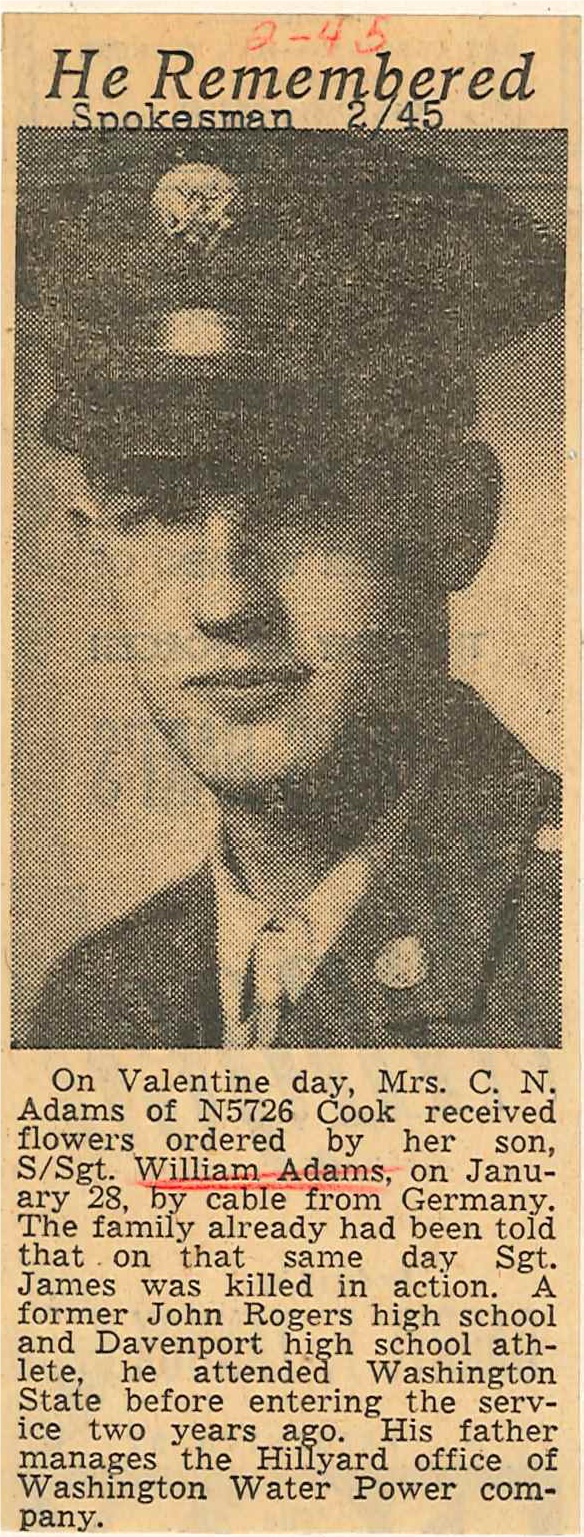
The news of William’s death on the battlefield hit his family and the local community hard. In February of 1945 Spokesman-Review ran an article entitled “Football Star, Adams, Killed,” noting his prowess as an athlete, his time spent at Washington State College, and his battlefield promotion, writing “he was promoted from Private First Class to Sergeant on the battlefield with the First Army.” The news of his death came with more gut-wrenching news, especially for Mrs. Adams. The Spokesman-Review again wrote the story, this time with the title “He Remembered,” explaining that “On Valentine’s Day, Mrs. C.N. Adams . . . received flowers ordered by her son, S/Sgt William Adams, on January 28, by cable from Germany. The family already had been told that on the same day Sgt. James (sic) was killed in action.” While a deeply saddening story, it is difficult to imagine a gesture that speaks more to the character of a young man than the fact that he somehow found the time, while beating back an enormous wave of Nazi soldiers, to send flowers to his mother in time for Valentine’s Day.
The current incarnation of the Fallen Cougars Project is not the first of its kind, but rather a project picking up where Dr. E.O. Holland, President of Washington State College, left off all decades ago. During the war, he set about honoring all the students of WSC who had lost their lives. He wanted to ensure that none of them would be forgotten and that their families knew their sacrifice was not unnoticed or unappreciated. To that end, he and the administration at WSC created brochures and pamphlets, ran articles in the school papers, and kept an honor roll to memorialize the fallen students. Dr. Holland also corresponded with the families of the fallen, sending them framed poems and acquiring photographs to be used in memorial materials; he even went so far as to supply the families with ornate picture frames in which they could put the photograph of their loved one. In one letter to the Adams’s, dated April 5, 1945, Dr. Holland wrote of William military service and sacrifice: “The fact that he was promoted to the rank of Sergeant on the battlefield is in itself evidence that he had initiative and courage in the heat of battle.” And of his time at WSC: “William did not receive a degree at this institution, but we had hoped to have him return to campus after the war and continue his work in the school of pharmacy.” As extensive as Dr. Holland and WSC’s work was, he was not alone in keeping William’s memory alive. Local newspapers ran memorials as well, and in 1945 the Spokane Chronicle reported that “Trees to be planted in Memorial Lane, at Baster General Hospital to honor World War II soldiers who have given their lives were purchased recently from a number of Spokane and Inland Empire Persons,” one memorial tree was purchased by none other than “Hillyard Lions Club for Sgt. William H. Adams.”
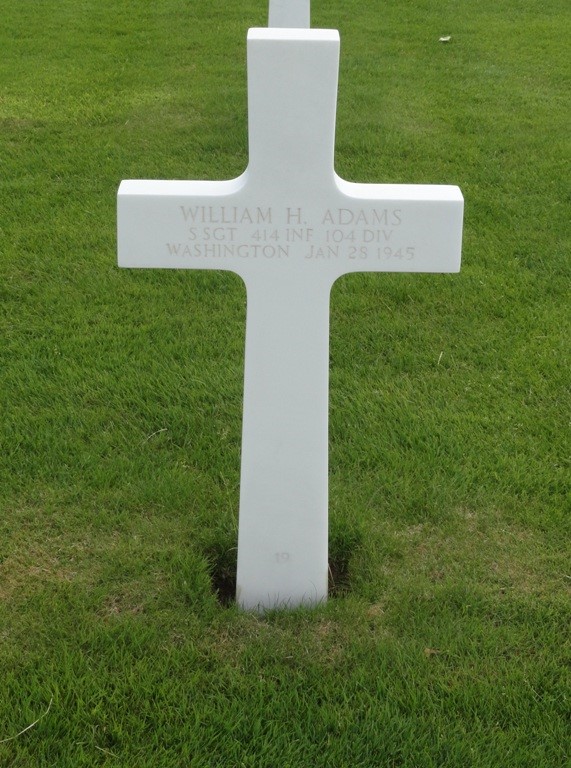
William was laid to rest and memorialized at the Netherlands American Cemetery Memorial in Margraten, Netherlands, at Plot E, Row 3, Grave 19. If one is looking for a memorial closer to home, they need only venture to his Alma Mater. On the main campus of William’s college, today called Washington State University in Pullman, Washington, William’s name is emblazoned in gold letters alongside the names of his brothers in arms, all the fallen cougars who gave their lives in defense of their families, their country, their beliefs, and in opposition to the vilest tyranny.