Edwin Alexis Bornander
Pre-WSC Background
Today the I-5 corridor is known as a constantly busy and flooded Interstate highway. It runs North-South, hugging up against the coastline and giving commuters fits. Today the metropolitan sprawl running from Olympia to Lacey further on to Tacoma and then Seattle, and more is known the world over, but it was not always this way. Though Tacoma and the areas surrounding it were growing in the early twentieth century, one would not be terribly impressed by hustling and bustling population. Tacoma was the hub then, as it is now, but tiny communities sprung up all around it, separated by water, forests, and other natural obstacles, these small communities developed largely independently of one another before the population booms of the later twentieth century. One such tiny community was Fife. Today a suburb East of Tacoma proper was described in the 1940’s as “at a valley crossroads in the midst of a thickly settled berry growing and truck-gardening district represented by a string of markets, taverns, shops, and a large, balloon-roofed dance hall along the highway,” with a population between 135 – 150 residents. Many of the early immigrants to this region, including fife, came from Scandinavia. No strangers to wet, cold weather, and even more experienced with fishing, logging, and maritime trade, Scandinavians found their footing quite well in the rugged and beautiful Pacific Northwest. One such Scandinavian was Ernest Bornander.
Ernest Bornander and his wife Margarite immigrated to Washington from Sweden in 1903. Ernest and Margarite settled in little Fife, Washington. By 1920 Ernest listed his employment as a manager of a “greenery,” perhaps tending to the berries vital to the region’s economy at the time, and Margarite listed her occupation as a homemaker. And quite a busy homemaker she must have been, by 1920 she had become a mother to three children. Anders Bornander was six years old in 1920, little Dorothy was four years old, and the baby of the family, Edwin Alexis Bornander, was only two. Both Ernest and Margarite had approximately eight-grade level educations, spoke Swedish but must have learned English rather quickly, and became naturalized American citizens in 1910. Edwin’s parents had given their children a chance to get the education they never received back in Sweden, and they were not going to let it go to waste.
All three children were proud Trojans, attending Fife High School in the 1930s. Edwin was quite active in school activities. As a freshman, he was a reporter for the school newspaper, The Fifonian, in 1932. He was also in the school orchestra that year, playing the violin. Edwin graduated from Fife High School in 1936. Growing up in a small agrarian town, the son of an agriculturalist must have instilled a love for the trade in a young Edwin, who decided to enroll at Washington State College in Pullman, Washington, and major in Agriculture.
WSC Experience
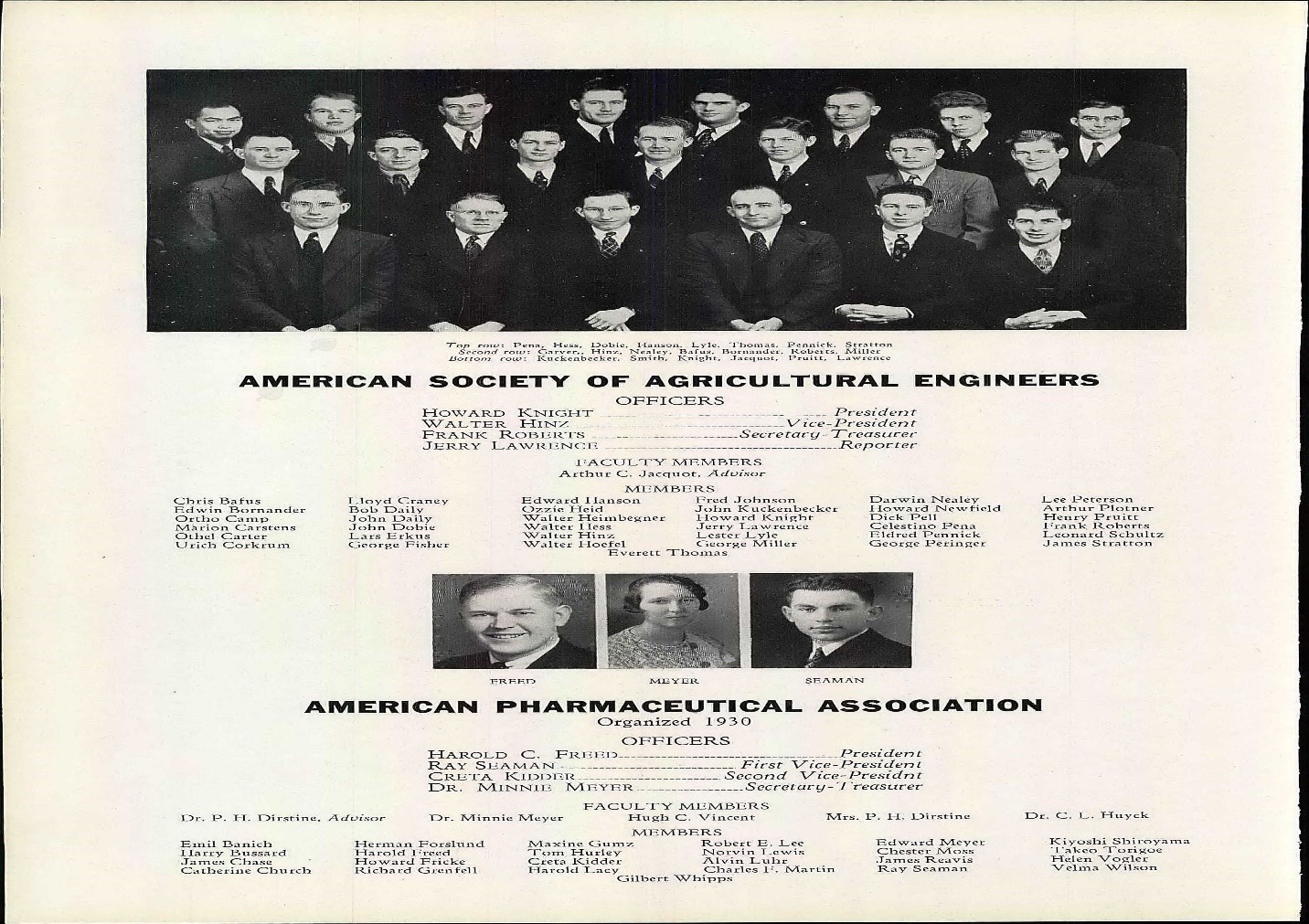
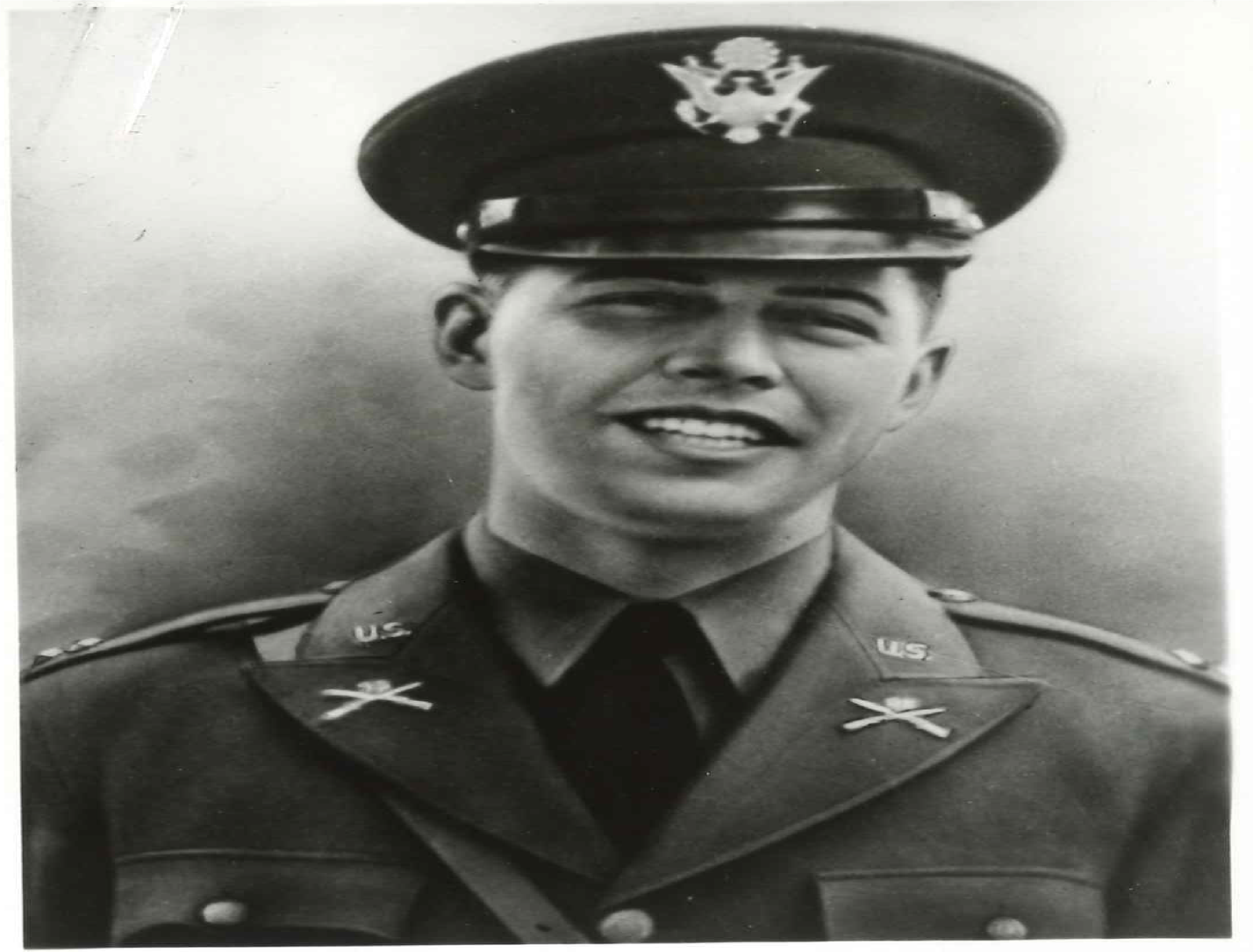
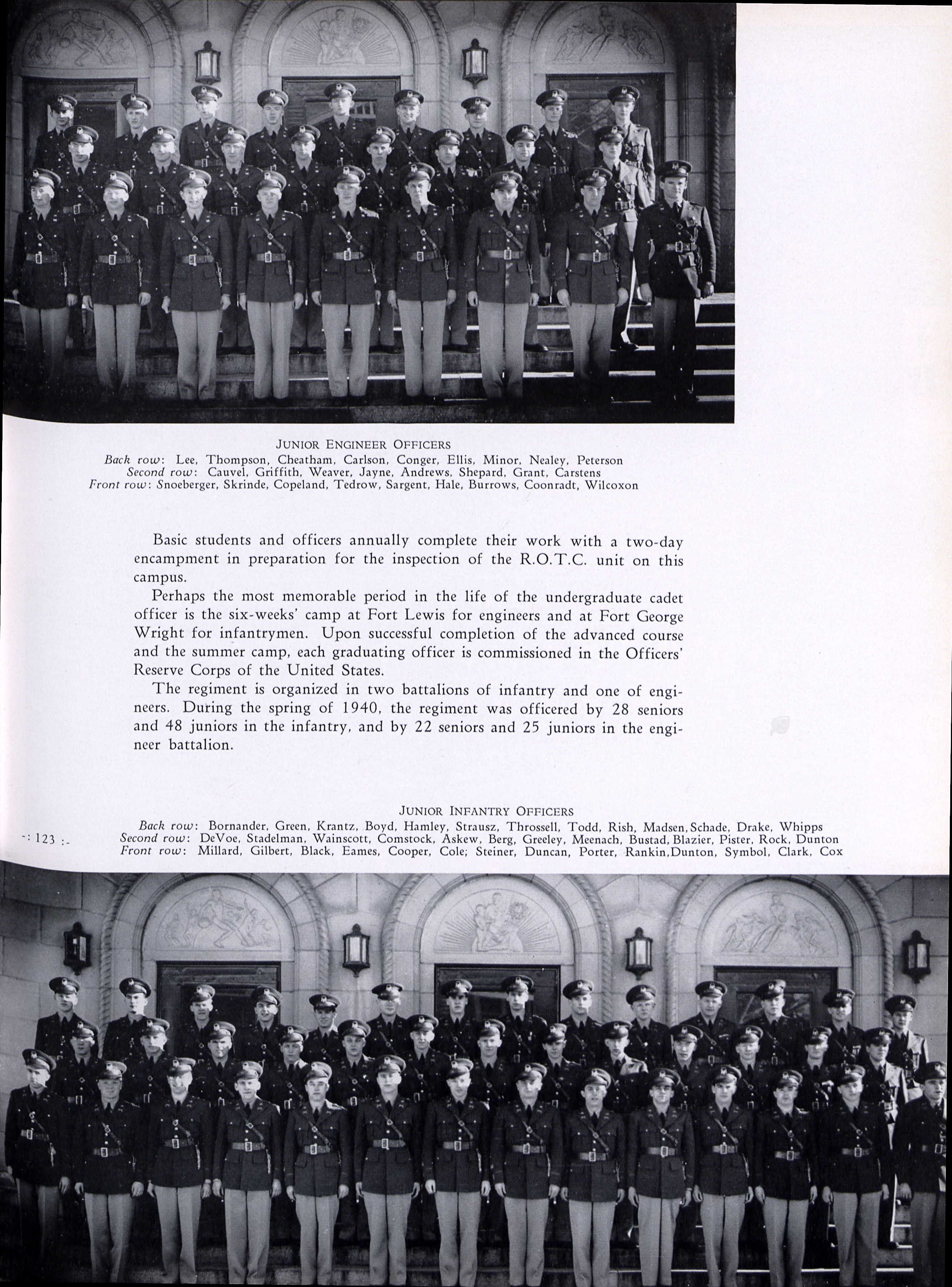
Once at WSC Edwin grew into a well-liked young man and took the nickname Eddie, though in some documents his family refers to him as Ed. Eddie was a busy man at WSC as well. In 1938 he joined the American Society of Agricultural Engineers which had a chapter on the Pullman campus. He later joined the WSC All Agricultural (AG) Club, becoming President of the club by 1941. He joined the Gray W Club, for student athletics, and was a manager for the WSC baseball team. While he participated in all of these clubs and student organization, Edwin was a member of the Alpha Gamma Rho Fraternity on Campus, and somehow found the time to join WSC’s Reserve Officer Training Corp (ROTC) program. In 1941 he had reached the rank of 1st Lieutenant for the infantry, leading up Company “A.” It was quite fitting that Edwin joined the ROTC, as he grew into a man that looked the part. Tall, with short hair, a wide mouth with big white teeth and a square jaw, he looked like the kind of man you would bet on in a boxing match. Eddie was well-known and well liked by the administration at WSC who saw the quality of man he had become in his time on the Palouse. WSC President E.O. Holland said that Eddie was thought of “with respect and affection by those of us who knew him while he was at the State College of Washington.”
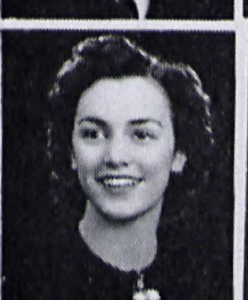
While Eddie enjoyed his years at WSC, developing into a well-rounded and dedicated young man, he also met a young woman on his journey to his college degree. Elma Beatrice Ryan was born in Winnipeg, Manitoba, Canada on September 8, 1942. According to documents she filled out around this time, she was 5’5, 124 pounds, with a small mole on the right side of her nose. Her class photos in the WSC yearbook show that was a lovely woman with wavy brown hair, kind eyes, and a mouth of pearly white teeth to match her future husband’s. As a child she had taken a boat from Manitoba to Seattle, Washington, arriving on October 31, 1923, and never again leaving American soil to 1942. Elma was active in the WSC Speech department, though her precise major could not be determined, she befriended WSC professor and head of the speech department M.L. Daggy. Eddie and Elma must have met on campus and courted through their respective graduations in 1941. Elma and Eddie got married on September 8, 1942, and she petitioned the federal government for American Citizenship as the wife of an American citizen, and after the attack on Pearl Harbor, an active member of the United States Army.
Wartime Service and Death
World War II in Europe had been raging since Nazi Germany invaded Poland on September 1, 1939. The fascist government, under the leadership of Austrian-born dictator Adolf Hitler, waged war throughout Europe. They conquered Denmark and Norway in April of 1940, followed by Belgium, the Netherlands, and tiny Luxembourg in May. Most astonishingly, the Germans managed to conquer France in just 39 days, and snapping North Africa from the French and British. They followed up those light-speed victories with a massive aerial campaign against the United Kingdom. In 1941, the Germans turned their military aims to the east, conquering Yugoslavia and Greece in April before betraying and invading the colossal Soviet Union on June 22, 1941. They then made one of the most famous mistakes in military history. Largely to appease their Japanese allies and to satisfy Hitler’s ideological fanaticism, but also with an eye to destabilizing American politics, Germany then declared war on the United States on December 11, 1941.
The United States Army desperately needed manpower, especially those with military training and experience. To that end, the Army called in its reserves, including Edwin Bornander. He received further officer training at Fort Lewis before and more at Fort Ord in California and Fort Pickett in Virginia. He was promoted to the rank of Captain and placed in charge of a company, though neither his military records nor newspapers articles about him reveal the company to which he was assigned. Captain Bornander was assigned to the 15th Infantry Regiment of the 3rd Infantry Division as it prepared to enter the war against the Axis powers.
The Allied strategy to defeat the Nazi Empire called for attacking its “soft underbelly” as it was called, the outskirts and edges of Nazi German and Fascist Italian holdings. The first plan called for digging the German and Italian military contingents out of North Africa and opening the Mediterranean to Allied shipping and aerial power before attacking the belligerent Axis powers directly. The Allied Invasion of Axis North Africa, codenamed Operation Torch, was planned and on May 14, 1942, Eddie and hundreds of thousands of young and brave American men like him said goodbye to their families and the lives they knew and sailed for North Africa. The 3rd infantry division disembarked from Norfolk, Virginia and made first contact with enemy forces at Fedala, French Morocco, on November 7 - 8, 1942. The 3rd infantry Division roared across North Africa at lightning speed, beating back German, Italian, and pro-fascist French forces alike and successfully seizing half of Morocco before being ordered to halt and prepare for a new assignment. This was the first of many victories that the 3rd Infantry Division would claim in the war as the only American Division that fought the Nazis on every front (Africa, Sicily, Italy, France, Germany.)
Overall Commander of American Forces was none other than General Dwight D. Eisenhower, who greenlit plans to invade the island of Sicily from the newly secured North African territory. To prepare and lead the men that would hit the beaches in Sicily, he tabbed Lieutenant General Lucian K. Truscott. A largely forgotten name in the annals of American military commanders, Truscott was well-respected by all of his contemporaries, even winning over the famously irritable George Patton. Truscott put the men of the 3rd infantry division through grueling new training to get them in peak physical condition for the invasion of Fascist Italy. “You play games to win, not to lose,” Truscott once explained to his son, “You fight wars to win! . . . They’re won by men who can be first-class sonsofbitches when they have to be . . . No sonofabitch, no commander.” An SOB Truscott may have been, but it produced results. The hallmark of his brutal training program was the “Truscott Trot,” a four-miles per hour marching pace for men under his command (the army standard was roughly half that.) He molded the 3rd infantry division into the sonsofbitches needed to win wars, and they went into action once again in the invasion of Sicily codenamed Operation Torch.
Without clear records that reveal the company Captain Bornander lead, it is difficult to ascertain which conflict he certainly took part in. It is likely, though, that he was present at all battles that the 3rd Infantry Division is known to have engaged in. On July 9 – 10 Captain Bornander and his men sailed from Tunisia and landed in Sicily. If the Allies truly considered Italy to be the “soft underbelly” of the Axis, the men that fought the battles may have begged to differ. Elite German units were reassigned from the Eastern Front to Sicily and the Italian Peninsula. For an idea of the kind of men that Captain Bornander and the rest of the invasion force were going to fight a prime example was German General Paul Conrath. General Conrath was put in charge of the Herman Göring Parachute Panzer Division in southern Sicily. When asked by German Field Marshall Albert Kesselring if he was ready to push back the Allied invasion back into the water, Conrath responded: “You want an immediate, reckless rush at the enemy? I’m your man.”
The Allied plan was to swarm the island, establish numerous beachheads and force the Axis to defend and entire southern coastline of the island at once. The 3rd infantry division landed at Torre di Gaffe, red beach, Mollarella and Poliscia on the east and west sides of the landing zone. They beat back an assault by the Italian 538th Coastal Defence Battalion handily and General Truscott set up his command post at Palazzo La Lumia by noon on July 10th. Captain Bornander and his men fought their way across the island, likely taking part in the battle at San Fratello and capture of Hill 715, leading to the fall of Messina and the collapse of German and Italian defensive capabilities on the island in mid-August of 1943. The Germans fell back to the Italian Peninsula and established several defensive lines in the mountains that run the width of the peninsula dubbed “the winter lines.” It is likely here, either in operation Baytown, Slapstick, or Avalanche that Captain Bornander and his men found themselves in a precarious situation.
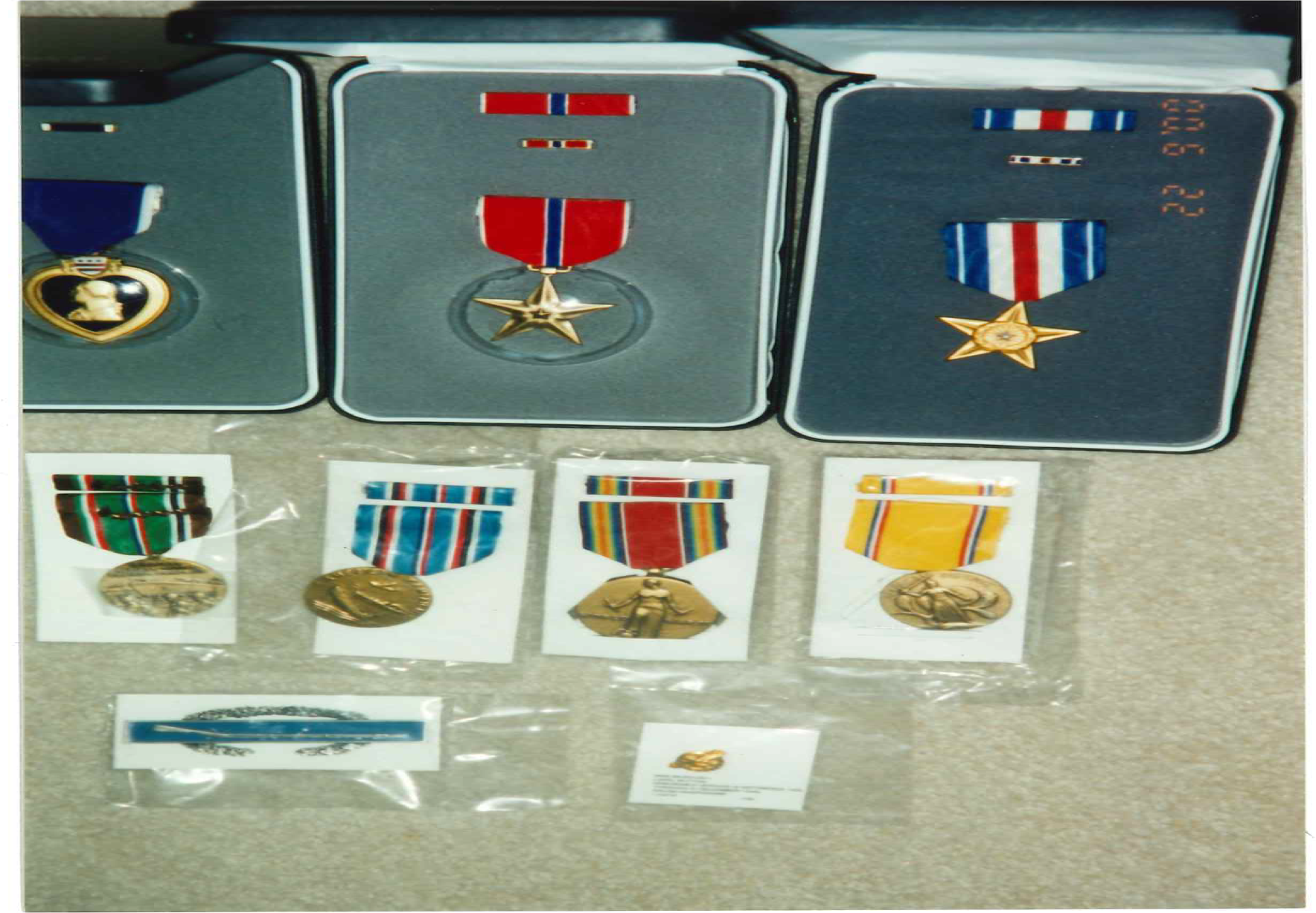
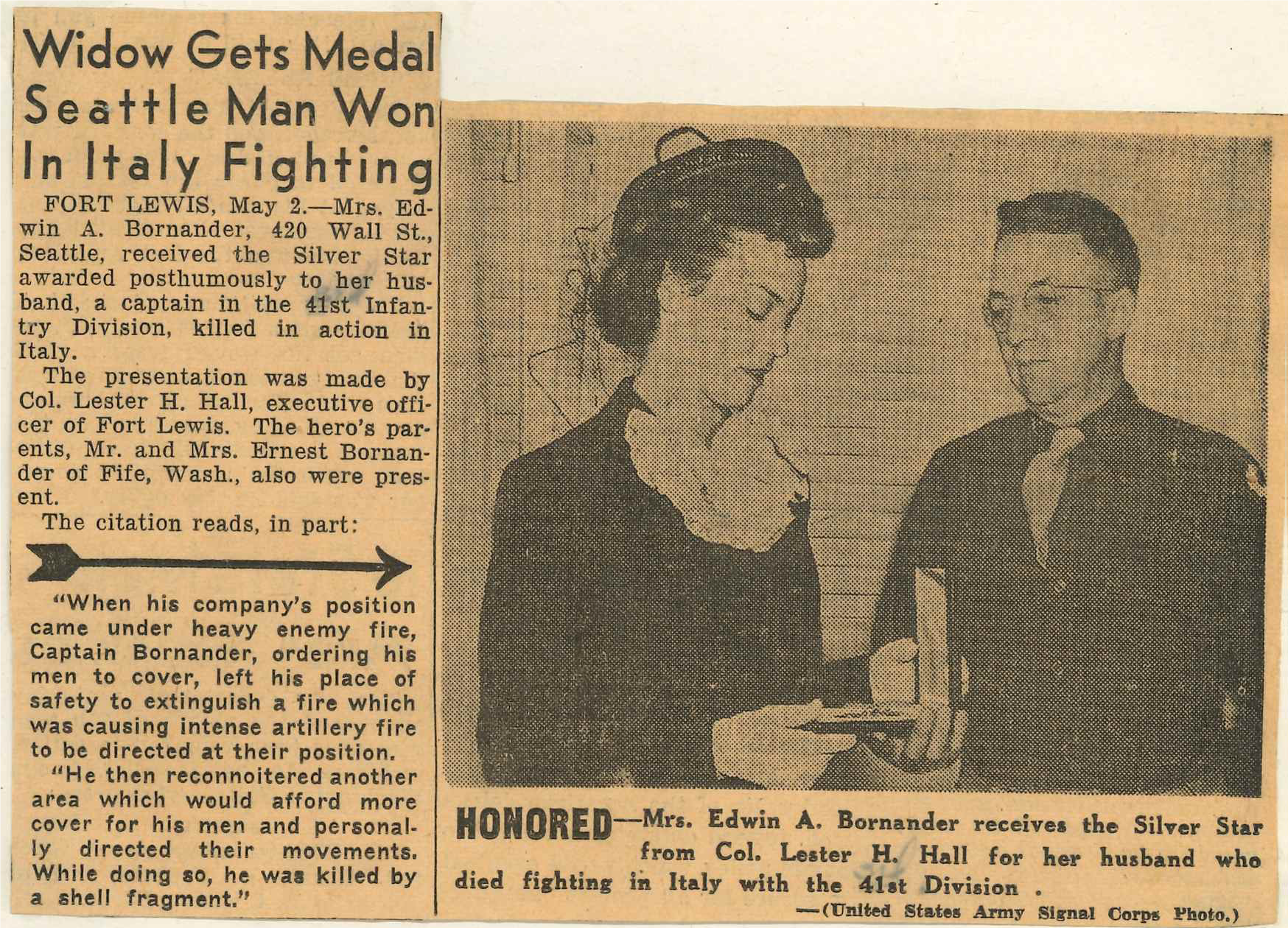
The defensive positions of the German army, and their masterful use of artillery, proved the bane of Allied soldiers’ existence. On November 7, 1943, exactly one year after he set foot in Africa, Captain Bornander’s unit came under hellacious artillery fire. A report that recommended Eddie for the Silver Star described what he did next to save the lives of his men. “When his company’s position came under heavy enemy fire, Captain Bornander, ordering his men to cover, left his place of safety to extinguish a fire which was causing intense artillery fire to be directed at their position.” After extinguishing the fire and exposing himself to the brutal artillery onslaught, Eddie saw a better location for his men to take cover from incoming shells. “He then . . . personally directed their movements. While doing so, he was killed by a shell fragment.” How many of his men were saved from that artillery barrage due to Captain Bornander’s quick thinking, tactical wherewithal, and what can only be described as a superhuman level of courage we can never say for sure, but his heroism left a deep impression on the battle-hardened men of the 3rd Division that caused them to recommend him for the Silver Star. But that was only the highest Award Eddie received. According to military records kept in Washington State University Manuscripts, Archives, and Special Collections (MASC), he was also awarded one Bronze Star, one Purple Heart, One American Defense Service Medal, The Honorable Service Lapel Button, four Bronze Service Stars, a Purple Heart, and one Arrowhead Medal.
Postwar Legacy
The news of Eddie’s death was met with immense sadness back home. WSC President E.O. Holland sent letters to the Bornander parents, Elma, and her parents, expressing his sorrow and intent to make a tribute to Eddie and every WSC man who lost his life in the conflict. Elma’s parents, Mr. and Mrs. H.E. Ryan, wrote that they were “so very pleased to receive the Washington State College tribute to the memory of our son-in-law, Capt. Edwin A. Bornander.” they continued to explain that Elma was not able to see the tribute herself because “Elma has already left for overseas.” Elma was overseas because, as The Spokesman-Review newspaper in Spokane, Washington wrote, she was “one of the most brilliant speech students in the history of the college, graduating in 1941 with high honors.” And she had gotten a good job in Seattle due to her impressive skills, but she “resigned after the death of her husband to go to Washington D.C. to take special training.” Elma finished her training and joined a Red Cross recreational unit before flying to Europe to do her part and assist the American and Allied armed forces in the war against the Nazis. On September 29, 1944, Elma wrote a thank you letter to Dr. Holland that is not only touching but reveals the eloquence with which she wields the English language and that her reputation as a brilliant speech student was not exaggerated. The letter reads:
Dear President Holland, In the first mail call since we arrived overseas, I got your letter telling me of the tribute to Eddie sent to my home in Kent. Though perhaps I may not get to see it until after I return to the States, I want you to know how sincerely I appreciate your kind thoughts. It is always a great comfort to me to hear anyone say that he thought Eddie was the fine kind of person I knew him to be. My work here is doing a great bit toward helping to heal the pain of last November’s news. You never completely forget, I guess, but the memories do become, little by little, more pleasant. Sincerely, Elma Bornander.
E.O. Holland continued his efforts to memorialize and make tributes to WSC students who lost their lives in the war, just as the current Fallen Cougars project continues to do. Often, however, we all overlook, and far too often, we forget the actions of brave young women like Elma, who also gave up the safe and happy existence they knew at home to serve their country. And it is doubly important to note that no small number of them were motivated to do so to prevent other American families from receiving news of fallen loved ones as she had.
Elma returned from Europe in time to be present for the ceremony to posthumously award Edwin with the Silver Star he earned with his last brave act. She was presented the metal in his stead by Col. Lester H. Hall at a gathering hosted by the United States Army Signal Corp. Edwin’s parents were present that day as well. Later in life Elma made sure that Edwin was afforded all the medals and honors owed to him for his service and that the medals were kept and cared for. A photo of the medals is kept in Washington State University’s archives. Edwin was laid to rest at the Sicily-Rome American Cemetery and Memorial in Nettuno, Citta Metripolitana di Roma Capitale in Lazio, Italy, at Plot F, Row 14, Grave 49. Edwin is further memorialized at his Alma Mater, today called Washington State University, where his name is emblazoned in golden letters on the World War II Memorial at the main campus in Pullman, Washington alongside his classmates and friends who fell fighting for their country, their beliefs, and in opposition to the vilest tyranny.