
Emil Saleem Bitar
Pre-WSC Background
From 1920’s to the 1970’s the citizens of Raymond, Washington frequented Bitar’s Department store downtown. It was a Dry Goods store, and by the 1970’s it may as well have stood there for a millennium. Everyone in town shopped there to buy the good quality clothing, shoes, and boots. In a town where rain falls nearly 200 days per year, threatening to drown those unaccustomed, and a town where the primary profession requires trudging through the densest rainforest North of the Amazon, shoes and boots and coats and sweaters are no trifling matter. A store with sub-standard stock would not last long for these connoisseurs of bad-weather clothing. The nostalgia for the store was immediate when I posted on Facebook asking anyone if they remembered the store or the family that ran it. I am from Raymond and graduated from Raymond High School, but the Bitar family was before my time. Though I grew up hearing the name, as well as the name Dracobly routinely, I did not know of the store until assigned to the Fallen Cougars Project. Community members lined up to inform a native son of their hometown exactly what it was he had missed by being born too late. The main recurring theme through all the posts are remembrances of the two kind faces that stood vigil behind the counter of Bitar’s for years. In the 1970’s customers saw George and Wadie Bitar working there just as they had for decades. George and Wadie had held down the store since their father’s passing in 1953 and kept it as the Raymond institution their father built. Suelaine Ruddell-Peterson, a citizen of Raymond, recalled the brothers fondly. “I remember they wrapped everything in brown paper and tied it with string from a large roll attached to the counter,” she explained, “One wall had a tall ladder that reached to the top of the high ceiling and ran the length of the wall. I think every pair of shoes I owned as a child came from there.” Shoes for the town children seem to be prime memory-maker for Bitar’s Department Store. “They sold Buster Brown shoes and Red Goose Shoes,” she finished. Marsha Seaton, another current resident of Raymond added “Mom and Dad always got my red goose shoes and the toy goose egg. Dad also bought his logging attire there too.” Gone are the days of Red Goose shoes and their complimentary toy eggs, but the memories have stood the test of time. Vivian Gailey Reinen, a retired Raymond Elementary School teacher, remembered the Bitar brothers and their family store well. “Bitar’s was a special store in our community,” she wrote, “The family members were always so kind and helpful. If memory is correct, they all were so elegantly dressed in black.” She may not know, but at least one Bitar had won awards for how well he dressed in the past. “Everything seemed to be folded or hung precisely yet it was a welcoming store and the squeaky wooden floor always made me smile. My mother probably bought all my shoes there too.” Kenneth Kb McKinney remembered something else that quickly brought back memories for others “I loved the smell in their store. Oiled wood floors and cigars.” Cindy Padgett responded “that’s what I remember most too. The smells!”
But, by the 1970’s, there was something the good people of Raymond did not know. That next to George and Wadie there was an empty space that should have been filled. There was a third Bitar boy. By all rights their bother, Emil Saleem Bitar, should have been dropping into the store on days off or during breaks from his lawyering well into the 1970’s. Cracking jokes with his brothers, smoking cigars, maybe scrambling up a ladder to help his brothers on a busy day. But he was gone, and those that entered the establishment in the 1970’s likely did not know that there should be another man in that store. But George and Wadie knew that their brother died so that the evils of Fascism and Nazism would not spread to our shores. Emil Saleem Bitar was a lot of things in his life, and we owe him a great debt, but all I can think about is a store with two brothers where there should have been three, and the incredibly brave man, a father, a husband, a lawyer, a Washington State Cougar (and yes, a Washington Husky as well), that should have been there with his brothers watching little girls faces light up when they received their shoes and their toy egg, but was not. What follows is the story of Emil Saleem Bitar, as best I can reconstruct it. His story, as all of our stories, are about more than just him but also the family that raised him, the town that molded him, and the country he loved. We are all impacted by the world we are born into, and in-turn, we impact that world. Some, like Emil, more than others. Perhaps it is self-flattery, but I like to think he would be pleased that another son of Raymond was tasked with writing his story for this project. May it do him justice, as it is, in a very literal sense, the least I can do.
What today is tiny Pacific County in Southwest Washington State is the ancestral land of the Willapa (Wela’Pakote’Li) tribe of Native Americans. Chinook and Lower Chehalis peoples have called the land home for thousands of years. More than forty Chinook settlements dotted the landscape along the Nemah, Naselle, Willapa, and Bone Rivers, and they wintered along Shoalwater Bay. They mastered the rugged landscape with their masterful craftsmanship of the now-famed sea-going canoes. The terrain is as beautiful as it is unforgiving. Lush green temperate rainforest covers the towering hills that give way to the deepest chasms. Marshlands stretch into the distance giving the illusion of solid ground to the uninitiated. Through the great cracks and gouges in the earth run the many rivers, creeks, and sloughs that sprawl like veins and arteries carrying the lifeblood of the region. The mightiest of these waterways in North Pacific County is the Willapa River that rolls dutifully to the North and West to empty into Willapa Bay at what is today the town of South Bend, Washington. The tribal peoples of Southwest Washington fished the many waterways, worked the oyster beds, and hunted the forests in the veritable cornucopia of the Willapa River Valley and Shoalwater Bay. After contact with Europeans, endemic disease outbreaks ravaged the populations, forcing many of the Chinook and Chehalis peoples to accept 80-acre allotments on the Quinault Indian Reservation. Those that remained had to wait much longer for official recognition from the United States federal government and the creation of the Shoalwater Bay Indian Reservation.
The largest European settlement on the Willapa Bay was incorporated as a town in 1907 and given the name of the first postmaster, L.V. Raymond. The small town became the epicenter of the logging, and quickly grew into an industrial lumber town. By 1908 there were as many as twenty manufacturing plants in the area which saw an influx of German, Polish, Greek, and Finnish immigrants to meet the demand for labor. This in turn created the need for a business district to sell goods to the growing population of nearly 4,000 by 1920. The business district was constructed entirely on stilts plunged into the tidelands and sloughs, some of which can still be seen jutting out from beneath the waters of the Willapa. One immigrant family that settled in Raymond intent on opening a store was not from Poland, Germany, or Finland.
Saleem A. Bitar immigrated to the United States from Tripoli, Syria, not to be confused with the more well-known Tripoli in Libya, in 1897. And records show that his future wife, Azizi (AKA Azzie), followed suit in 1905. It is likely he came with the intent to sell goods to people striking out toward Alaska for the Yukon gold Rush and ended up in Western Washington. The family eventually settled in Cowlitz County and later Grays Harbor County where they ran Dry Goods stores. Growing up in coastal city and well-known trading hub like Tripoli may have given Saleem an eye for economic booms and made the decisions to move through thriving and growing coastal cities and to open or purchase stores that much easier a risk to take. Saleem began identifying himself as S.A. Bitar in business letterhead, a popular convention for businessmen of the day, and the Bitar family finally moved to Raymond with intentions to continue their successful businesses. When they arrived, they were not the only Lebanese immigrant families to find success in that rainy little town on the Willapa. Elias Fred Dracobly and the Dracobly family were also Lebanese immigrants that had opened successful businesses downtown. I personally remember the Dracobly buildings and the family name from my own childhood in Raymond. Salim Khalil Shoucair and his family already owned and operated successful businesses in town when the Bitar’s arrived. According to oral histories, Salim Shoucair had owned a store at 210 1st Street since 1906. Named La Vouge, it was prime real estate for S.A. Bitar, who purchased the store sometime between 1915 – 1919 when Shoucair decided to move California. The small but thriving Lebanese immigrant community raised their families, became community leaders, and ran their many profitable businesses that stood the test of time in Raymond. Bitar’s Department Store, operated by the aptly named S.A. Bitar & Sons, was a fixture of downtown Raymond for decades.
Emil Bitar: A Well-Dressed Man
S.A. and Azzie Bitar had their first child, Wadir S. Bitar, in 1908 and over the course of the following six years they had four more children: George S. Bitar, Josephine Bitar, Emil S. Bitar, and Maxine Bitar. The focus of this story is on the fourth-born Bitar child, Emil. Emil was born on March 27, 1913, in Montesano, Washington, and was baptized Christian that same day. Census records indicate that neither of his parents attended school growing up, they clearly wanted their children to get good educations and to focus on developing numerous life skills. Emil went to school in Raymond and worked at the family business in the summers as soon as he was old enough. The 1930 census also shows that then-seventeen-year-old Emil and one of his sisters were students but all three of his older siblings listed their occupations as “Salesman” or “Saleswoman,” while S.A. listed his occupation as “Retail Merchant” selling “Dry Goods.” The family lived in a pretty two-story house atop a hill at 1210 Duryea Street located in a neighborhood called “The Island” by locals as it was the only neighborhood in town that was not completely submerged when seasonal flooding occurred.
Emil excelled as a Raymond High School Seagull. The school yearbook, The Gray Gull, shows that Emil went by the nickname “Abe” in a high school class of approximately thirty-five students. Emil clearly had a love of music as he is listed and pictured in the First Year Orchestra and the “advanced orchestra” ensemble in which he played the obligato violin. But Emil was not the only one of the Bitar clan to catch the eye of his peers. His sister Josephine is listed in the same 1928 yearbook as “A maiden with meek brown eyes.” She participated in Drama club, French Club, Home Economics, and the Girls Sextette along with authoring several publications for school papers. After graduating from Raymond High School in 1930 and working one last summer at the Bitar & Sons Department Store, Emil decided to continue his education. In 1931 he enrolled in Washington State College and moved to Pullman to become a Washington State Cougar.
WSC Experience
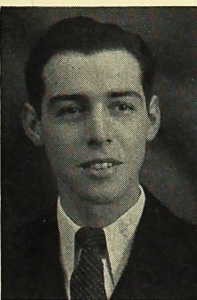
Once in college, Emil came into his own life and grew into a handsome young man. Tall and slender with a full head of onyx hair he parted on the left, he had angular features and a strong jawline. Once established at WSC Emil took part in numerous clubs and social organization for WSC students. In 1934 he was on the “Rally Committee” that was responsible for organizing pep rallies and school spirit events throughout the academic year. The class of 1934 elected its class officers and tabbed Emil as the Vice-President for the group. Maxine Vandercook was elected as treasurer, and she is pictured next to Emil in the 1934 yearbook. This is an interesting connection for Emil because Maxine Vandercook was close friends, it appears, with one Frances Nedra Graves of Centralia, Washington. In October of 1935 the Chehalis Bee-Nugget wrote an article explaining that many local people were going to Pullman that weekend to watch the Washington State Cougars take on the University of Washington Huskies in Pullman. The article says “Miss Maxine Vandercook and Miss Frances Graves of Centralia . . . will leave Seattle Saturday morning by airplane for Spokane,” to catch the game. It is possible that Emil met Frances through his friend and colleague Maxine Vandercook. In whatever manner they met, the two met one another around this time in their lives.
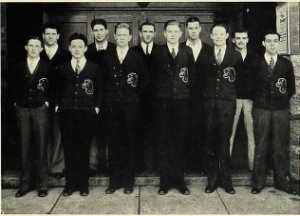
When Emil was not tending to his duties as Vice President, planning pep rallies, or pursuing the affections of Frances Graves while double majoring in history and political science he kept remarkably busy. He joined Washington State College’s Reserve Officer Training Corp program in 1935 where he served in Company G serving under the command of Captain Joseph E. Caraher. In 1935 the annual military ball was revived and hosted in the Women’s gymnasium. They decorated the gym with sandbags, flags, and military banners to complete the military ambiance. Emil was inducted into the Scabbard and Blade Society, a military honor society as First Sergeant Bitar, during an intermission. University President E.O. Holland was an also listed as an honorary member for his integral role and active participation in ROTC and student life. Emil also somehow found the time to serve on the University Board of Control and the Crimson Circle Society all four years at WSC. Lastly, Emil apparently managed to look very sharp and dapper during his tenure at WSC as in 1935 he and fellow student Olive Von Nahmen were chosen by popular vote as the best dressed man and woman on campus for 1935. Emil finished his tenure at WSC and graduated with both his degrees, making him an ideal fit for law school. Emil then traded in the Crimson and Gray for the Purple and Gold of the University of Washington to attend law school. A lapse in judgement we can all forgive, as WSC did not have a law school.
Emil Bitar: Lawyer, Husband, Father, Soldier.
After completing his law degree at UW and passing the Bar exam in 1938, Emil returned home to Raymond and put down roots in the community and once again near the family he loved. He married Frances Nedra Graves on July 6, 1939. The ceremony took place at 3:30 P.M. in Chehalis, Washington conducted by Methodist minister Philip H. Raymond and witnessed by Maxine Vandercook and George S. Bitar. Emil and his new bride moved into a house at 123 Duryea Street, today a vacant lot across from the town furniture store, approximately one mile from his parents’ residence on The Island and a few blocks from the family Dry Goods Business. Emil set up a private law firm in town and quickly grew reputation as a good lawyer and an up-and-coming community leader. He joined the local Elks Lodge, the Kiwanis Club, the Active Club, and was President of the Pacific County Republicans while also serving as the President of the Pacific County Red Cross for two years. Frances and Emil brought two daughters, Helen and Lea, into the world between 1941 and 1942. Emil then served as the Raymond City Attorney, a post he likely planned to keep until those dreams were put on hold. Emil had achieved much in his life to 1941, a second-generation immigrant from a tiny logging town had earned multiple college degrees, completed law school, opened his own legal practice, sired a beautiful young family, and earned a sterling reputation as a pillar of his community all before the age of thirty. But while he was building this idyllic life for himself and his family, the world around him edged closer and closer to war.
Wartime Service and Death
World War II in Europe had been raging since Nazi Germany invaded Poland on September 1, 1939. The fascist government, under the leadership of Austrian-born dictator Adolf Hitler, waged war throughout Europe. They conquered both Denmark and Norway in April of 1940, followed by Belgium, the Netherlands, and tiny Luxembourg in May of that same year. Most astonishingly the Germans managed to conquer France in just 39 days, following up that light-speed victory with a massive aerial campaign against the United Kingdom. In 1941 the Germans turned their military aims to the east, conquering Yugoslavia and Greece in April before betraying and invading the colossal Soviet Union on June 22, 1941. They then made a mistake they did not need to make. Largely to appease their Japanese allies and to satisfy Hitler’s ideological fanaticism, but also with an eye to destabilizing American politics, Germany then declared war on the United States on December 11, 1941.
Emil Bitar: Operation Torch, Operation Husky, and Heroism Under Fire
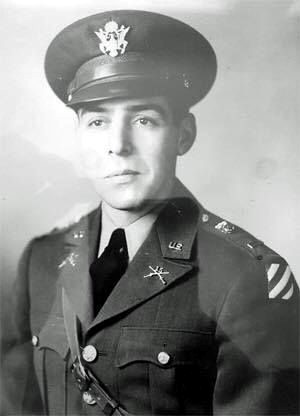
Back in 1935 Emil was appointed to the rank of Second Lieutenant in the American Infantry Reserve upon completion of his university degrees and graduation from the ROTC program. He was promoted to First Lieutenant in the Infantry Reserve on August 3, 1938 and remained enrolled in the reserve thereafter. Men like Emil were in desperately short supply for an American military caught unawares and suddenly in a war on two continents across two oceans. His time in the ROTC, his proven intelligence and leadership abilities, his fluency in both English and Arabic, and his familiarity with military organization were desperately needed to form the nucleus of an American Officer Corp. Emil entered extended active duty in June of 1941. He was initially assigned as an adjutant officer at Fort Lewis upon the outbreak of war before he was transferred back to the infantry which required even more updated training. He completed the training programs at Fort Ord in California and Camp Prickett in Virginia. Upon completion he was promoted to the rank of Captain. Captain Bitar was assigned to lead Company E of the 2nd Infantry Battalion, 15th Infantry Regiment, of the 3rd Infantry Division and prepared for the United States to enter the war against the Nazis. The Allied strategy to defeat the Nazi Empire called for attacking its “soft underbelly” as it was called, the outskirts and edges of Nazi German and Fascist Italian holdings. The first plan called for digging the German and Italian military contingents out of North Africa and opening up the Mediterranean to Allied shipping and aerial power before attacking the belligerent Axis powers directly. The Allied Invasion of Axis North Africa, codenamed Operation Torch, was planned and on May 14, 1942, Emil and hundreds of thousands of young and brave American men like him said goodbye to their families and the lives they knew and sailed for North Africa. The 3rd infantry division disembarked from Norfolk, Virginia and made first contact with enemy forces at Fedala, French Morocco, on November 8, 1942. The 3rd infantry Division roared across North Africa at lightning speed, beating back German, Italian, and pro-fascist French forces alike and successfully seizing half of Morocco before being ordered to halt and prepare for a new assignment. This was the first of many victories that the 3rd Infantry Division would claim in the war as the only American Division that fought the Nazis on every front (Africa, Sicily, Italy, France, Germany.)
Overall Commander of American Forces was none other than General Dwight D. Eisenhower, who greenlit plans to invade the island of Sicily from the newly secured North African territory. To prepare and lead the men that would hit the beaches in Sicily, he tabbed Lieutenant General Lucian K. Truscott. A largely forgotten name in the annals of American military commanders, Truscott was well-respected by all of his contemporaries, even winning over the famously irritable George Patton. Truscott put the men of the 3rd infantry division through grueling new training to get them in peak physical condition for the invasion of Fascist Italy. “You play games to win, not to lose,” Truscott once explained to his son, “You fight wars to win! . . . They’re won by men who can be first-class sonsofbitches when they have to be . . . No sonofabitch, no commander.” An SOB Truscott may have been, but it produced results. The hallmark of his brutal training program was a four-miles per hour marching pace for men under his command (the army standard was roughly half that.) He molded the 3rd infantry division into the sonsofbitches needed to win wars, and they went into action once again in the invasion of Sicily codenamed Operation Torch.
In early August, after fighting its way across the length of the island, Truscott’s men found themselves outside the town of San Fratello. Taking the town would secure an American flank and allow for the splitting of the island in two pieces and force Axis forces to abandon the island. If the American high command thought Italy was the soft underbelly of the Axis, the men that fought in Sicily would likely beg to differ. Across from the 3rd Infantry Division and Captain Bitar’s company “E”, was the German 29th Panzergrenadier division and the Italian 26th Assietta Infantry Division. The men of the 29th were battle-hardened, having seen seen action against the Soviet Red Army in the failed invasion of the Soviet Union. The Axis forces had seized elevated positions and placed their heavy artillery in strategic locations. The area around San Fratello was a flat valley, making it perfect for German artillery officers. Emil Bitar and his company were tasked with taking one of these elevated positions dubbed “Hill 715.” But “Hill” does not conjure the correct image in the mind. It was a massive rock sitting atop a hill roughly 566 feet high with jagged cliffs on one side and wide-open spaces leading up to the sloping incline at the base of the hill everywhere else.
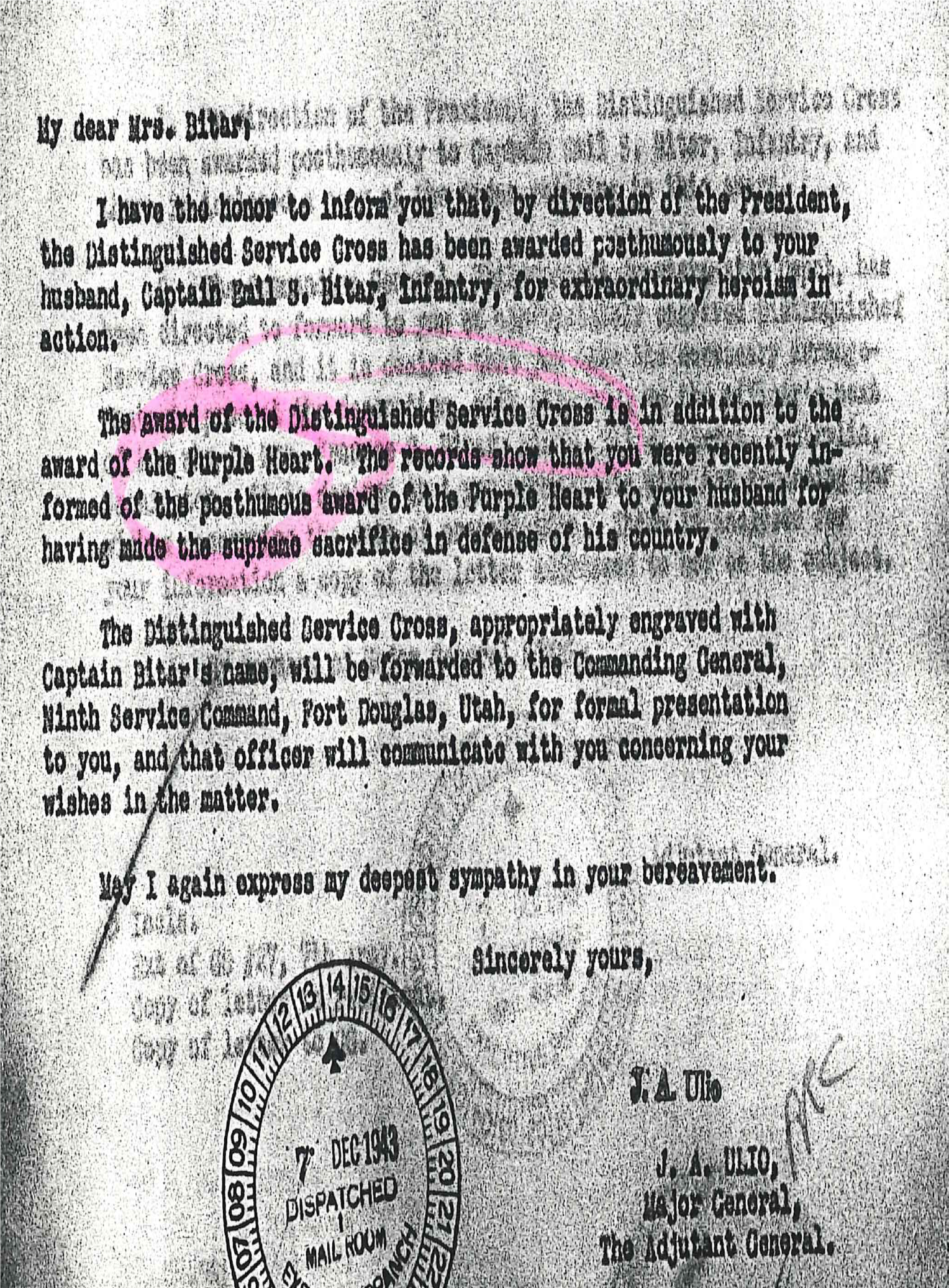
On August 4, 1943, Captain Bitar and Company E made their attempt to take the hill. The description of Captain Bitar’s action was submitted to 15th Infantry Regiment Command headquarters after the battle. The report describes how Captain Bitar “personally led his company in the attack against enemy positions atop a hill . . . held by an estimate of one Battalion of enemy infantry, reinforced by automatic weapons, mortars, and artillery.” As Bitar’s men entered the open terrain, roughly 350 yards from the hill they came under heavy fire from enemy rifles and machine guns just as “an intense artillery barrage which lasted for two hours and inflicted approximately 30% casualties” was unleashed by the Germans and Italians atop hill 715. As if that were not bad enough, Bitar and his men realized that they were charging across an enemy minefield “from which 70 anti-personnel mines were later removed.” As Captain Bitar attempted to rally his men, an artillery shell landed to his left, killing his First Sergeant instantly and “rendering his left arm useless.” Somehow maintaining his composure, Captain Bitar knew the only way out of this mess for his men was to, seemingly counterintuitively, charge the enemy position and render their artillery unusable. “In spite of his wounds,” the report continues, “Captain Bitar rallied his company and led them forward through the mine field to within 150 yards of the enemy position where he was mortally wounded by a mortar shell.” While the attack was ultimately stopped, Captain Bitar’s actions saved many of the men in his company from certain death at the hands of the well-sighted German artillery batteries. The report concludes “Captain Bitar’s leadership and bravery under intense enemy fire while seriously wounded was an inspiration to the men of his command, and reflects the finest traditions of the military service. . . It is recommended that Captain Emil S. Bitar, 0-326537, Company “E”, 15th Infantry, be awarded, posthumously, the Distinguished Service Cross for extraordinary heroism in action.” On October 5, 1943, the army responded to the request: “By command of Lieutenant General Patton. . . Under the provisions of Army Regulations 600-45 . . . a Distinguished Service Cross is awarded, posthumously, to the following individual,” naming Captain Bitar as the recipient.
Postwar Legacy
Emil’s death hit his family and those communities he had impacted very hard. One newspaper ran an article about Captain Bitar entitled “Campus mourns Captain’s Death.” Another later reported on his posthumous Distinguished Service Cross, the second-highest medal in the United States military. “Bitar’s company is believed to have raised the first American flag over Sicily at Caste St. Angelo,” read the article. “Colonel Max Sullivan praised Bitar’s ‘extraordinary heroism in action’.” As more details came in about the manner in which Captain Bitar lost his life, more articles were written. One paper dedicated a full page to Bitar’s life story and included a large photograph of him in his military uniform under the headline “Capt. Bitar led Company Against Hill: Award is made for His Bravery.”
Washington State College President E.O. Holland, hurt by the losses and inspired by the sacrifices of so many of his brave former students, decided to put together pamphlets and other materials to honor the Fallen Cougars, a project that we carry on today. In an effort to acquire photographs and information about each student, E.O. Holland contacted the parents of each fallen Cougar. The Bitar’s were quite touched by President’s Holland’s interest in honoring their son and wrote a letter to him in September of 1944 stating “We are in receipt of your fine letter and the beautiful tribute and honor of our dear son Emil. We will treasure both of these, especially the tribute, for it is symbolic of the ideals he, and others like him, cherished, and so unselfishly sacrificed for a worthy cause.” The letter concludes with “From each and every member of the family we wish to express our appreciation for your sincere interest. We are yours very truly, Mr. and Mrs. S.A. Bitar.” In another article S.A., showing the kind of class that very few people would be able to show under such circumstances, told another newspaper that he was “sure the sacrifice that my son has offered for the betterment of humanity will help to preserve these great United States of America, with its just doctrines.”
Time marched on, and very little was produced about the Bitars in the pages of newspapers. However, in August of 1955, the Daily Chronicle in Centralia, Washington, published an article about Mrs. Frances Bitar receiving a special achievement award from the Army. In the aftermath of the war and the loss of her husband. Frances took a job with the Army at Fort Lewis beginning in 1945. The article refers to Frances as a “dark haired mother of two daughters.” Helen and Lea, fourteen and thirteen years old respectively, attended school in Lakewood, Washington. At the writing of the article, the Bitars lived in Tacoma, but they remain proud of their father’s legacy which was immortalized in the renaming of the main road in Fort Lewis: Bitar Avenue.
Bitar Avenue is not the only memorial to Captain Bitar that remains to this day. He was laid to rest at the Sicily-Rome American Cemetery and Memorial, (Nettuno, Citta Metripolitana di Roma Capitale, Lazio, Italy), in Plot F, Row 5, Grave 3. His name is emblazoned on the World War II memorial on the main campus of Washington State University in Pullman where he once marched in ROTC regalia, served on clubs and committees, won awards for fashion, met the love of his life and mother of his children, and more. Emil Bitar was a lot of things over the course of his life, a Raymond Seagull, A Washington Husky, a soldier in the United States Army, a father, a husband, a son, a war hero, and a Washington State Cougar. But we must not forget that he was a man that should have lived a much longer life with that family, those college friends, his loving wife and adoring daughters. Perhaps Emil is also a lesson for us today, a lesson about the price that is paid in blood of our best and brightest, and the agony of those they leave behind. At leas that is the lesson that one Raymond Seagull and Washington State Cougar taught another, seven decades after he sacrificed his life battling authoritarian oppression.